Entradas populares

Mostrando entradas con la etiqueta demons. Mostrar todas las entradas

martes, 18 de marzo de 2014

Yokai 5

Art by: Cattype
Here I bring three Yokai in exchange for two of them are not well known, not very graceful, in this pack comes the Kitsune, one that we know almost everyone and is the most appreciated.
Art by: Eleanor
Kitsune - Fox

The fox is one of the most popular animals in Japanese mythology, is a guardian of the gods or a yokai who cheats and carries diseases. The worship of Inari, is widespread, this god or Kami takes on the appearance of a fox and its shrines are always guarded by a pair of statues of this animal. One favors the fields and hunt rodents.

In contrast to this the yokai version. This differs from kami kitsune is that does not have a sanctuary, so it is not revered. The yokai is called nogitsune, and can transmit deadly diseases and possess people, in Japan there so the expression "being pinched by a kitsune" used for when a person "is in the clouds".

We can also add to the Ninko these two spirits that hide their true form fox in a human body, usually a beautiful young woman, to seduce and deceive men. According to Chinese mythology, the fox represents the feminine or yin and therefore try to wrest yang men. China also mythology comes the nine-tailed kitsune, a legendary animal that brings peace and prosperity. It is said that whoever eats it will be protected from evil.

Kitsune have several weaknesses while adopting the shape of a person. Do not hold the dogs and reflected in the water discover their true figure. If they are attacked, they retaliate in groups. The best antidote to neutralize their attack is to eat meat.

A famous story goes that a kitsune disguised as a woman to get married and have children. But years later she was discovered by her husband when he "came out" queue because of a dog. In Japan it is still using the phrase " teach the queue" when they see one's true intentions. Other people become small and made ​​mischief. A much discussed is to offer urine tea to weary travelers.

The kitsune has passed into history. Of the people who behave strangely is still saying that they are a kitsune.
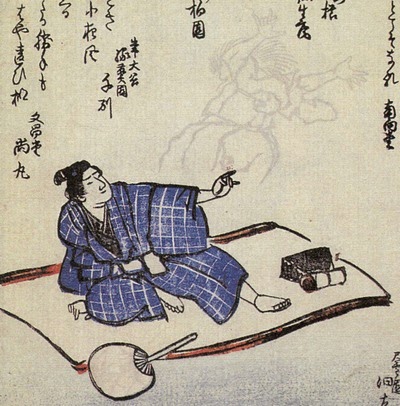
Makuragaeshi - Pull over pillow

The Pull over pillow is a yokai with a specialized function: reposition the pillow at night and strip the bed. It has no known manner. Today, if we find the bed unmade in the morning or just on the floor, do not think that could be the work of a spirit. But if they did in the past because the dream had supernatural properties. Pillows were treated with care as they were vehicles through which our spirits objects traveling to another world. It was a bad omen to change the pillow during sleep, is to separate the soul from the body. In fact makuragaeshi is also used when someone dies and his head pointing north, which is the direction in which Buddha died standing. That's not bode wake up with your head in that direction.

There is a story that explains how the spirit becomes pull over pillow. A blind traveler stayed in an inn. When he believed to be alone in his room, he began to count the coins I had. However, the landlord was spying on him and saw that he had a large sum of money. Driven by greed , the next morning I accompany pretending making guide. He led him to a secluded place, stole and killed him. From that day the spirit is installed at the inn and stir the sleeping pillow in your room. His appearances announce misfortunes.

Mehitotsuboo - Monk Cyclops

It is one of the most famous Japanese yokai. Although usually refers to a one-eyed monk, there are regions where it has one leg (with one or two eyes) while others not even a monk. Sometimes the size of a child and other is giant.

Regarding why one eye, there are legends of all kinds. It is common that the absence of a crop or plant in an area with mehitotsuboo explaining. In Nagano is that a branch of sesame left eyed a god, then identified with this monk, so do not plant the crop there.

Another theory about the origin is similar to the Greek Cyclops. Reacted with blacksmiths wear a patch over one eye to, in case of accident, not becoming blind. It is common to appear with "welded" legs, finished in a single large foot.

A third possible origin is related Gongoro Kagemasa, a samurai that after receiving a crush on one eye kept attacking and killing enemies. He was deified and worshiped. But God , became carrier spirit of misfortunes and later a yokai. This decline could be due to "Gongoro" closely resembles goryoo, which refers to the souls of the dead with the living resentment toward which we must worship to appease.

The monk often visit villages at year end. Prevent their effects have been devised various methods. Hanging at the entrance of a house whose plot twisted baskets recalls thousands of eyes. Another is to hang dried sardines eye pierced by a skewer. Also repel red beans. The next day the children are forced to eat beans because the monk says the name of those who eat them to bring a disease such as smallpox.


That's all for today with regard to Yokais, Enjoy it!


___________________________________________________________________________

Dibujo de: Aloe
Aquí os traigo otros tres Yokai a cambio de que dos de ellos no son ni muy conocidos, ni muy agraciados, en este pack viene el Kitsune, uno al que prácticamente conocemos todos y es de los mas apreciados.
Dibujo de: Segdavinci (Sara)

Kitsune - Zorro

El zorro es uno de los animales mas populares en la mitología japonesa, es un guardián de los dioses o un yokai que engaña y porta enfermedades. El culto a Inari, está muy extendido, este dios o Kami adopta la apariencia de un zorro y sus santuarios están siempre custodiados por un par de estatuas de este animal. Uno de ellos favorece los campos y caza los roedores.

En contraste esta la versión yokai. Este kitsune se diferencia del kami en que no pertenece a ningún santuario, así que no es venerado. El yokai es llamado nogitsune, y puede transmitir enfermedades mortales y poseer a las personas, en Japón existe por esto la expresión "ser pellizcado por un kitsune" usada para cuando una persona "esta en Babia".

También podemos añadir a estos dos los espíritus ninko, que esconden su verdadera forma de zorro en un cuerpo humano, normalmente de una bella joven, para seducir y engañar a los hombres. Según la mitología China el zorro representa lo femenino o yin y por eso tratan de arrebatar el yang a los hombres. También de la mitología China proviene el kitsune de nueve colas, un animal legendario que trae paz y prosperidad. Se dice que quien lo coma será protegido del mal.

Los kitsune tienen varios puntos débiles mientras adoptan la forma de una persona. No aguantan a los perros y al reflejarse en el agua descubren su verdadera figura. Si son atacados, se vengarán en grupo. El mejor antídoto para neutralizar su ataque es comer su carne.

Una famosa historia cuenta que un kitsune disfrazado de mujer llego a casarse y tener hijos. Pero años mas tarde fue descubierta por su marido cuando le "salió" cola por culpa de un perro. En Japón se sigue usando la expresión "enseñar la cola" cuando a uno se le ven las verdaderas intenciones. Otros se transforman en personas y realizan pequeñas travesuras. Una muy comentada es la de ofrecer orina por té a los viajeros fatigados.

El kitsune no ha pasado a la historia. De las personas que se comportan de forma extraña se sigue diciendo que son un kitsune.

Makuragaeshi - Vuelcalmohadas

El vuelcaalmohadas es un yokai con una función especializada: cambiar la posición de la almohada por las noches y deshacer la cama. No tiene forma conocida. Hoy en día, si encontramos la cama deshecha por las mañanas o acabamos en el suelo, no pensamos que ha podido ser obra de un espíritu. Pero si lo hacían en el pasado ya que el sueño tenía propiedades sobrenaturales. Las almohadas eran objetos tratados con cuidado pues eran vehículos a través de los cuales nuestros espíritus viajaban hacia otro mundo. Era un mal augurio cambiar la almohada durante el sueño, equivale a separar el alma del cuerpo. De echo makuragaeshi, se utiliza también cuando alguien muere y se coloca su cabeza señalando al norte, que es la dirección en la que murió Buda. Por eso no es buen presagio despertar con la cabeza en esa dirección.

Hay una historia que explica como un espíritu se convierte en vuelcalmohadas. Un viajero ciego se alojó en una posada. Cuando creyó estar solo en su cuarto, se puso a contar las monedas que tenía. Sin embargo, el posadero lo estaba espiando y vio que tenia una gran suma de dinero. Movido por avaricia, a la mañana siguiente lo acompaño fingiendo hacer de guía. Lo condujo a un lugar apartado, le robo y le mato. Desde aquel día el espíritu esta instalado en la posada y revuelve la almohada a los que duermen en su habitación. Sus apariciones anuncian desgracias.

Mehitotsuboo - Monje Ciclope

Es uno de los yokai mas famosos de Japón. Aunque normalmente se refiere a un monje de un solo ojo, hay regiones en las que tiene una sola pierna (con uno o dos ojos) mientras que en otras ni siquiera es un monje. A veces tiene el tamaño de un niño y otras es gigante.

Respecto al porqué de un solo ojo, hay leyendas de todo tipo. Es común que la ausencia de un cultivo o una planta en una zona se explique con el mehitotsuboo. En Nagano se cuenta que una rama de sésamo dejó tuerto a un dios, identificado después con este monje, por lo que allí no plantan ese cultivo.

Otra teoría sobre su origen es parecida a la de los cíclopes griegos. Reaccionada con los herreros de llevar un parche en un ojo para, en caso de accidente, no quedarse ciegos. Es común que aparezca con las piernas "soldadas", terminadas en un único gran pie.

Un tercer posible origen tiene que ver con Gongoro Kagemasa, un samurai que tras recibir un flechazo en un ojo siguió atacando y matando enemigos. Esté fue divinizado y venerados. Sin embargo, de dios, pasó a ser espíritu portador de desgracias y a yokai posteriormente. Esta caída pudo ser debida a que "Gongoro" se parece mucho a goryoo, que se refiere a las almas de los muertos con resentimiento hacia los vivos a las que hay que adorar para apaciguarlas.

El monje suele visitar las aldeas a final de año. Para prevenir sus efectos se han ideado diversos métodos. Colgar en la entrada de casa unos canastos trenzados cuya trama recuerda a miles de ojos. Otro consiste en colgar sardinas secas con los ojos atravesados por un pincho. También le repelen las habas rojas. El día en el que viene se obliga a los niños a comer habas ya que el monje apunta el nombre de aquellos que no las coman para traerles alguna enfermedad como la viruela.


Eso es todo por hoy en lo referido a Yokais, Disfrutadlo!!

domingo, 2 de marzo de 2014

Yokai 4


Art by: Niuner 


As I promised today I bring you two updates in one day, in compensation for the absence. And as one of the themes that I like are the Yokai because here you have, more mythological beings.

All three of which I will talk today I think are well known and all you sounded.


Kappa - River street arab 

It is one of the most famous and certainly Japan which has had a real existence, until the early XX century as there is news of witnesses who claimed to have found one. In fact, many people consider it an elusive animal that has not yet been discovered more than a Yokai.

They are found in rivers, ponds, where freshwater accumulates. Its appearance resembles that of a turtle or amphibian with humanoid features. Depending on location, is represented by shell and webbed hands and feet. In matching the descriptions is to give a viscous appearance, set its size as a small child, and display it on the neck cavity as a dish full of water always carries. This dish is the trait that defines it and gives you energy. If the plate is empty, dizzy and loses strength. Therefore, one of the tricks to get rid of one, is to pretend kindness and make a bow to the back and spilling water.

Are said to be ancient gods of rivers and lakes, to which the people worshiped. But as man learned to master the water whit construction, unless they came and were forgotten turned kappa.

Weakness for horses, kids and balls of uncertain origin that humans have on our buttocks, the kappa aims to start after leading river bottom prey. Despite its violence, is goofy and has many weaknesses. Do not hold metal objects or food offered to Buddha. Also escapes peas, hemp, sesame seeds and deer antler.


Katawaguruma - One wheel carriage

More than its name (truck wheel), this yokai is identified with a woman climb into a car wrapped in flames that runs at night causing a loud bang. One who looks or laughs she gets a curse, which is multiplied if you talk to someone about what he has seen. It is said that steals the souls of those who dare to look, making it a much feared yokai. Sometimes they do not attack those who see them, but who kidnap their children.

The reason that they appear associated with a wheel is far from clear, although we know that the wheel represents the teachings of dharma and the rapid rotation of a metaphorically explains the infinite concatenation of causes and effects that govern the fate. We may think that women are paying ablaze results wrongdoing.

Legend has it that in Shiga, was a village they passed katawaguruma every night. It was said that whoever saw him lose consciousness, so at dusk all were locked in their homes to avoid meet you. But there was a curious woman one night, hearing the carriage creaked, cracked the door a crack and peered out to see happen to the woman riding on it surrounded by fire. When he was returned to the room and discovered that her baby was gone. She felt guilty and recover the baby nailed to the front door a note saying: "Katawaguruma, shame on me Give me the boy, not yet known as a wheel moves". The next night when the yokai step ahead of the house, saw the note and thought that women should have a good heart so returned the baby, also telling him that now that he had been discovered would no longer haunt the village.


Art by: Jamew85


Keukegen - Furry

The Furry is difficult to see yokai. In fact, it can also mean "exceptional and rarely seen" His body lies under a blanket of long hair that only reveals a nose and two big round eyes. Its appearance resembles that of a spaniel. Lives in areas adjacent to the houses where moisture, such as gardens and baths, or in gloomy interiors of homes whose living conditions are very poor. Its low activity is reduced at night to drink. It is said that finding a furry ad is death or disease to the inhabitants of the house, although it is unclear if it will work as the cause of the misfortunes or simply approaching unhealthy places where death is lurking. It attracts dirt to prevent that strain at home must be kept aerated, let in the sun and avoid dampness.

According to Toriyama Seiken, a minor goddess in China much like furry called "Shaggy woman" exists.

The furry has inspired authors to modern manga and anime. Shigeru Mizuki included it in cartoons and Hayao Miyazaki took it as a base for one of its most distinctive creations, the Susuwatari or "elves dust" My Neighbor Totoro and Spirited Away.


For today 's it, here's your three new Yokai, you 'll upload more soon.
Since that day not able to upgrade and which, as will having no free time I will publish things, I apologize in advance if time does not appear.

_____________________________________________________________________________

Dibujo por: Spacecoyote

Tal como he prometido hoy os traigo dos actualizaciones en un día, en compensación por la ausencia. Y como una de los temas que mas me gustan son los Yokai pues aquí tenéis, mas seres mitológicos.

Los tres de los que voy a hablar hoy creo que son bastante conocidos y a todos os sonaran.

Dibujo por: Casener


Kappa - Golfillo de río

Es uno de los mas famosos de Japón y sin duda el que ha tenido una existencia más real, ya que hasta principios del siglo XX hay noticias de testigos que afirmaban haberse encontrado con uno. De hecho, mucha gente lo considera un animal esquivo que aun no ha sido descubierto mas que un Yokai.

Se encuentran en los ríos, estanques o charcas, donde se acumule agua dulce. Su aspecto recuerda al de una tortuga o anfibio con rasgos humanoides. Dependiendo del lugar, se representa con caparazón y membrana interdigital en manos y pies. En lo que coinciden todas las descripciones es en darle un aspecto viscoso; fijar su tamaño como el de un niño pequeño: y en mostrarlo con una cavidad sobre el cogote a modo de plato que siempre lleva lleno de agua. Este plato es el rasgo que lo define y le da energía. Si el plato se vacía, se marea y pierde la fuerza. Por ello, uno de los trucos para deshacerse de uno, es fingir amabilidad y realizar le una reverencia hasta que la devuelva, derramando así el agua.

Se dice que son antiguos dioses de los ríos y lagos, a los que la gente adoraba. Pero a medida que el hombre aprendió a dominar el agua con la construcción, se vinieron a menos y cayeron en el olvido volviéndose kappa.

Siente debilidad por los caballos, los niños y unas bolas de origen incierto que los humanos tenemos en nuestras nalgas, que el kappa aspira a arrancar tras llevar al fondo del río a su presa. A pesar de su violencia, es tontorrón y tiene muchos puntos débiles. No aguanta los objetos metálicos ni la comida ofrecida a Buda. También escapa de los guisantes, el cáñamo, las semillas de sésamo y la cornamenta de los ciervos.

Dibujo por: Ehime


Katawaguruma - Carro monotrochón

Mas de lo que indica su nombre (Carro de una rueda), este yokai se identifica con una mujer subida en un carro envuelto en llamas que por las noches corre provocando un gran estruendo. Aquel que la ve o se ríe de ella recibe una maldición, que se multiplica si uno habla con otra persona sobre lo que ha visto. Se dice que roba el alma de aquellos que se atreven a mirarlo, siendo así un yokai muy temido. Otras veces no atacan a quienes les ven, si no que secuestran a sus hijos.

La razón de que estos aparezcan asociados a una rueda no está nada clara, aun que sabemos que la rueda representa las enseñanzas del dharma y que el giro rápido de una explica metafóricamente la concatenación infinita de causas y efectos que rigen el destino. Podemos pensar que la mujer envuelta en llamas esta pagando los resultados de una mala acción.

La leyenda cuenta que en Shiga, había una aldea por la que cada noche pasaba el katawaguruma. Se decía que quien lo veía perdía la conciencia, por lo que al oscurecer todos se encerraban en sus casas para evitar encontrárselo. Sin embargo había una joven curiosa que una noche, al escuchar el chirrío del carro, abrió un poco la puerta y por una rendija escudriñó hacia fuera para ver pasar a la mujer montada en él rodeada de fuego. Cuando se fue, volvió a la habitación y descubrió que su bebe había desaparecido. La mujer se sintió culpable y para recuperar al bebe clavó en la puerta de casa una nota que decía: "Katawaguruma, la culpa es mía. Devuélveme al pequeño, que todavía no sabe como se mueve una rueda". A la noche siguiente cuando el yokai paso por delante de la casa, vio la nota y pensó que la mujer debía tener un buen corazón por lo que devolvió el bebé, diciéndole además que ahora que había sido descubierto ya no volvería a rondar la aldea.

Dibujo por: ZombiDJ


Keukegen - Peluso

El peluso es un yokai difícil de ver. De hecho, también puede significar "excepcional y rara vez visto". Su cuerpo se esconde bajo un manto de pelo largo que solo deja ver una nariz y dos grandes ojos redondos. Su aspecto recuerda al de un perro de aguas. Vive en zonas adyacentes a las casas donde hay humedad, como jardines y baños, o en lóbregos interiores de viviendas cuyas condiciones de habitabilidad son muy pobres. Su escasa actividad se reduce a la noche para beber. Se dice que encontrar un peluso es anuncio de muerte o enfermedad para los moradores de esa vivienda, aunque no esta claro si funciona como el causante de las desgracias o simplemente se acerca a lugares insalubres donde la muerte está rondando. Le atrae la suciedad, para prevenir que se cuele en casa hay que mantenerla aireada, dejar que entre el sol y evitar humedades.

Según Toriyama Seiken, en China existe una diosa menor muy parecida al peluso llamada "mujer lanuda".

El peluso ha servido de inspiración a autores modernos de manga y anime. Mizuki Shigueru lo incluyó en sus viñetas y Hayao Miyazaki lo tomo como base para una de sus mas peculiares creaciones, los susuwatari o "duendes del polvo" de Mi vecino Totoro y El viaje de Chihiro.


Por hoy es todo,  aquí tenéis vuestros tres nuevos Yokai, pronto subiré mas.
Puesto que no se que días podre actualizar y cuales no, según vaya teniendo tiempo libre iré publicando las cosas, perdón por adelantado si estoy un tiempo sin aparecer.


martes, 18 de febrero de 2014

Yokai 3


Art from: Uehara

Tachan ! I bring a new entry of Yokai on this we see the Inugami, some will sound if you seen Inuyasha, the Kamaitachi who is one of the best known and Kamikiri this a little less known but feared by women, in order, I begin .


Inugami - God Dog

It is an evil spirit that casts evil eye to people. It is a yokai that someone owns and uses to annoy whoever you like. The spirits of dead animals or people who do not leave this world cause misfortune to the living. The belief of this yokai was created in China.

This belief was generated as follows. A hungry dog ​​will adjust the neckstrap to limit their movements. Before we put him a bowl of food so that however much it may try to catch it it can only touch it with his tongue. After several days you bid. If obeys thereafter all orders of the master, this will let him eat and also happen to be worshiped. This master cuts his head that even disembodied pouncing on the meal. After completing the ritual, the master takes his head at his home altar to worship and make offerings to him in exchange for satisfying his desires.

His body seems to be reincarnated in the body of a weasel or mouse that fits in your hand. When the master want something, take with him the animal and place it near the object of desire. But this God only responds to negative things such as envy or jealousy. So it can cause evil eye and diseases.

Art from: Xatchett

Kamaitachi - Falcate weasel

This yokai presents tips with sharp weapons like a sickle (kama) that cause deep wounds.

A supposed natural phenomenon produced by the kamaitachi, the creation of an air gap in the center of the eddies that hitting someone cuts the skin cleanly. At first these wounds do not hurt or bleed, but can reach the bone, and after a while begins to suffer severe pain. There are cases of people who have felt a sudden wind hitting them and then appeared above them multiple wounds in the legs. These phenomena have long started to explain how "being cut by a weasel" and then began to represent the kamaitachi.

They are typical of cold regions of eastern Japan. In the West, it is said that these phenomena are caused by "wild gorges", that is, sickles which became abandoned tsukumogami. In Nagano, it was said that the kamaitachi appeared in a whirlwind when it stepped on a calendar. In Kochi is believed to burn a calendar healed cuts. In Gifu, these cuts provoke three gods. The first strip down the person, the second short with a knife, and the third applies an ointment to no blood.

Art from: Xatchett

Kamikiri - Clippers

It is a yokai that does not stand as it is not dangerous and hasn't a history with deep meaning. He looks like a rooster punk but is supposed to be the transformation of an insect of the same name, kamikirimushi, which amounts to a "stag beetle wheel."

The cut hairs only takes a prank: cut the knot of people without them noticing. Fot this has hands instead of a scissor endings. Generally the bun is cut and thrown in the way of light-headedness is not noticed already he acting with discretion.

There are almost no references to explain their origin. According to some, it is a form of kitsune (soon reach him). During the Edo period there were numerous cases of attacks on maids on errands out alone at night and returned without bun. The fact that these events continue today, has led to the suggestion that after this yokai is a criminal degenerate fetish hides.


Well, that's all for today, next Tuesday I will upload more yokai, namely touch: the Kappa, the Katawaguruma and keukegen. Two of them very well known.

On the other hand I'm thinking of having some Japanese history if it interests someone.

Enjoy it!

________________________________________________________________________________


Dibujo de: Sanoe


Tachan! os traigo una nueva entrada de Yokai en esta veremos al Inugami, que algunos os sonara si habéis visto Inuyasha, el Kamaitachi que es uno se los mas conocidos y el Kamikiri, este un poco menos conocido pero muy temido por las mujeres, en fin, empecemos.

Dibujo de: Kotarointheheart


Inugami - Dios perro

Es un espíritu maligno que echa mal de ojo a las personas. Es un yokai que alguien posee y utiliza para molestar a quien lo le guste. Los espíritus de animales o personas muertas que no abandonan este mundo provocan desgracias a los vivos. La creencia de este yokai se creo en China.

Esta creencia se genero de la siguiente manera. A un perro hambriento se le ajusta la correa al cuello para limitar sus movimientos. Delante de él se pone un cuenco con comida de tal forma que por mucho que trate de alcanzarlo solo pueda rozar lo con la lengua. Tras varios días se le hace una oferta. Si obedece a partir de ese momento todas las ordenes del amo, este le dejará comer y ademas pasara a ser adorado. Para ello el amo le corta la cabeza, que aun separada del cuerpo se abalanza sobre la comida. Tras acabar el rito, el amo lleva la cabeza al altar de su casa para adorarlo y realizar le ofrendas a cambio de que cumpla sus deseos.

Su cuerpo parece ser. se reencarna en el cuerpo de una comadreja o ratón que cabe en la mano. Cuando el amo desean algo, llevan al animal consigo y lo colocan cerca del objeto de deseo. Pero, este dios solo responde a cosas negativas como la envidia o los celos. Así que puede causar mal de ojo y enfermedades.

Dibujo de: Niuner


Kamaitachi - Comadreja falcada

Este yokai presenta extremidades con armas cortantes a modo de hoces (kama) que causan heridas profundas.

Un supuesto fenómeno natural producido por la kamaitachi, el la creación de un vacío de aire en el centro de los remolinos, que al golpear a alguien corta la piel de forma limpia. Al principio estas heridas ni sangran ni duelen, aunque pueden alcanzar el hueso, y después de un rato se comienza a sufrir un dolor agudo. Existen casos de personas que han sentido un viento repentino que les golpeaba y después les aparecían múltiples heridas sobretodo en las piernas. Estos fenómenos hace mucho tiempo se comenzaron a explicar como "ser cortado por una comadreja" y de ahí se empezó a representar al kamaitachi.

Son típicas de zonas frías del este de Japón. En el oeste, estos fenómenos se dice que son provocados por "hoces salvajes", osea, hoces abandonadas que se convirtieron en tsukumogami. En Nagano, se decía que la kamaitachi aparecía con un torbellino cuando se pisaba un calendario. En Kochi se creía que quemar un calendario curaba los cortes. En Gifu, estos cortes los provocan tres dioses. El primero tira al suelo a la persona: el segundo la corta con una navaja; el tercero le aplica un ungüento para que no sangre.

Dibujo de: Cattype


Kamikiri - Cortapelos

Es un yokai que no destaca ya que no es muy peligroso ni tiene una historia con un significado profundo. Tiene aspecto de gallo punki aunque se supone que es la transformación de un insecto del mismo nombre, kamikirimushi, que viene a ser un "escarabajo ciervo volante".

El corta pelos solo realiza una travesura: cortar el moño de las personas sin que se den cuenta. Para ello tiene en vez de manos unas terminaciones en forma de tijera. Generalmente el moño cortado queda tirado en el camino y a parte de ligereza en la cabeza no se nota mas ya que actúa con total discreción.

No hay casi referencias que expliquen su origen. Según algunos, sería una forma de kitsune (pronto llegaremos a él). Durante el periodo Edo hubo numerosos casos de ataques a criadas que salían solas a hacer recados por las noches y volvían sin moño. El hecho de que estos sucesos continúen hoy día, ha llevado a pensar que tras este yokai se esconde un criminal degenerado y fetichista.


Bueno, esto es todo por hoy, el Martes que viene subiré mas yokai, en concreto tocan: el Kappa, el Katawaguruma y el keukegen. Dos de ellos muy muy conocidos.

Por otro lado estoy pensando en contar un poco de la historia de Japón si esto le interesa a alguien.

Disfrutadlo!


martes, 11 de febrero de 2014

Yokai 2


Hi! here I bring three new Yokai! So go slowly completing the guidance of these beings.


Furaribi - Wandering Fire

Is the version of the Yokai wisps. Small flames that arise when organic materials decompose and aimlessly walking distance move. Usually seen at night in places where it has stuff like rotting swamps and cemeteries. It is a phenomenon that even today does not have a convincing explanation. Another name they have in Japan is Hitodama.

It looks like a bird with dog face in flames.

These flames are also appreciated on straw hats or raincoats that were used before. These, not heated or burned if you don`t try to get rid of them. In doing so, they multiplied and made ​​stronger, coming to burn the body of the person.

Legend has it that the banks of the river Jinzu in Toyama, were the strange night call which called Sayuri fire. If someone called "Sayuri , Sayuri", arose appear a cut woman's head with spiteful look. This was lady of a feudal, was his favorite and the rest were jealous, they managed to convince his master that she had a relates to a page. Anger he ordered to scarf she.


Gama - Toad

The toad is related in all cultures with occult practices. For example, in China there were hermits who had features of amphibians and made magic potions with frogs.

A well known medicine for burns, cracks and wounds is the "toad oil " sold an ointment street pharmacists and it is in pharmacies today. It really takes no substance secreted by the toad is only to resonate more the name.

The Gama is a toad with the size of a rock. The stories about the spread throughout Japan. Near Kyoto is that a farmer was abducted by two hermits and taken to a cave. There was tied and beaten until they fell asleep from exhaustion he take to break free and hit his head and run home. The next day he go back to the cave and found a dead frog and a dead turtle with head injuries.

Also on Mount Hiei have a holy spirit of toad. A man who was climbing made ​​a break, sat on a rock to smoke. When it happened a while felt a tremor. Standing up he discovered he was sitting on a large toad shook sore from the embers of snuff. The man died a few days later beacause the toad cursed him.

Currently in Azabu (Tokyo) hidden in apartments is the "Frog Pond " A small part of the original farm that belonged to a single feudal. His story was that one night, two servants were devoured by a large toad. The Lord decided to punish him, but that night he had a dream. An old man appeared remorseful for the crime and promised to protect him. Mr. relied on sleep, and was rewarded because after a while, there was a big fire. Delivering on its promise, the frog pond and spray it water repeatedly until the flames went out.


Hebi - Snake

Snakes have long been respected as gods of rivers and mountains. Meanwhile in Japan legends of snakes become young beautiful and mixed with humans have.

In more ancient Japanese myths a giant reptile with eight heads and eight tails defeated by Susanoo appears. When he came down to earth, he met some seniors who cried why the snake ate her daughters and just was the youngest them. He felt compassion for them and he ingenuity to make the snake drink lots of sake and kill her when she slept.

The snake is used as a sign of obstinacy and spite. The origin of this association is very old. The goddess Benzaiten, shown together with a snake. Better not visit their shrines with partner that can lead to rupture.

On a more popular level, a semi reptile - legendary ever get to see is the Tsuchinoko, a snake that screams like a mouse and is wider in the middle.

Legend of the Yokai is Dojoji The temple has a story about the monk Anchin and Kiyohime. He was a Buddhist monk on a pilgrimage to Kumano temple. Along the way he was assault by Kiyohime, very insistently, so he promised to marry her when he returned. But he wanted to forget that promise and escaped. She angrily pursued him as a serpent, following the river Hidagawa to reach the Dojoji. Anchin hid inside a bell but Kiyohime wrapped and spitting fire burned him alive. She actually was the spirit of the river.

I hope you like this new publication of Yokai I will  bring more soon, enjoy it!
_________________________________________________________________________________

Hola!! aquí os traigo tres nuevos Yokai! Para así poco a poco ir completando la guía de estos seres.


Furaribi - Fuego errante

Es la versión Yokai de los fuegos fatuos. Pequeñas llamas que surgen al descomponerse materias orgánicas y se mueven una poca distancia sin rumbo. Suelen verse de noche, en lugares donde ha materia pudriéndose como pantanos y cementerios. Es un fenómeno que aun hoy día no tiene una explicación convincente. Otro nombre que tienen en Japón es Hitodama. 

Tiene la apariencia de un pájaro con cara de perro envuelto en llamas.

Estas llamas se aprecian también sobre los sombreros o chubasqueros de paja que se usaban de antes. Estas, ni calentaban, ni quemaban si no intentabas deshacerte de ellas. De hacerlo, se multiplicaban y hacían mas fuertes, llegando a quemar el cuerpo de la persona.

Una leyenda cuenta que a orillas del rió Jinzu, en Toyama, se veían por la noche extrañas llamas a las cuales llamaban fuego de Sayuri. Si alguien llamaba "Sayuri, Sayuri" por allí, surgía la cabeza recién cortada de una mujer con mirada rencorosa. Esta era la dama de un feudal, era su favorita y el resto la tenían envidia, lograron hacer creer a su señor que tenia una relaciona con un paje. La ira le pudo y ordeno que la descuartizasen.


Gama - Sapo

El sapo esta relacionado en todas las culturas con las practicas ocultas. Por ejemplo en China hubo ermitaños que tenían rasgos de anfibios y hacían pociones mágicas con sapos.

Una medicina muy conocida contra quemaduras, grietas y heridas es el "aceite de sapo" un ungüento que vendían los farmacéuticos ambulantes y hoy esta en las farmacias. Realmente no lleva sustancia secretada por el sapo solo es para que resuene mas el nombre.

El Gama es un sapo del tamaño de una roca. Las historias sobre el se reparten por todo Japón. Cerca de Kioto se cuenta que un campesino fue secuestrado por dos ermitaños y llevado a una cueva. Allí fue atado y vapuleado hasta que cayeron dormidos del cansancio momento que aprovecho para liberarse y golpear la cabeza y huir a casa. Al día siguiente regreso a la cueva y encontró un sapo y una tortuga muertos con unas heridas en la cabeza.

También en el monte Hiei cuentan que su espíritu sagrado es un sapo. Un hombre que estaba escalando hizo un descanso se sentó sobre una roca a fumar. Cuando paso un rato sintió un temblor. Al ponerse de pie descubrió que estaba sentado sobre un gran sapo que se sacudía dolorido por las ascuas del tabaco. El hombre murió a los pocos días por que el sapo le maldijo.

Actualmente en Azabu (Tokio) escondido entre apartamentos se encuentra el "Estanque del sapo". Se conserva solo una pequeña parte del original que pertenecía a una finca de un feudal. Su historia era que una noche, dos criados fueron devorados por un gran sapo. El señor decidió castigarle, pero esa noche tuvo un sueño. Un anciano se le apareció arrepentido por el crimen y le prometió que le protegería. El señor confió en el sueño, y se vio recompensado ya que un tiempo después, hubo un gran incendio. Cumpliendo con su promesa, el sapo salio del estanque y pulverizo agua repetidamente sobre las llamas hasta que se apagaron.


Hebi - Serpiente

Desde hace mucho las serpientes han sido respetadas como dioses de los ríos y montañas. Al mismo tiempo en Japón se cuentan leyendas de serpientes que se convierten en bellos jóvenes y se mezclan con los humanos.

En mitos japoneses mas antiguos aparece un reptil gigante de ocho cabezas y ocho colas derrotado por Susanoo. Cuando descendió a la tierra, se encontró con unos ancianos que lloraban por que la serpiente se comía a sus hijas y ya solo les quedaba la mas joven. Sintió compasión por ellos y se las ingenio para hacer beber a la serpiente gran cantidad de sake y matarla cuando dormía.

La serpiente se usa como signo de obstinación y rencor. El origen de esta asociación es muy antiguo. La diosa Benzaiten, se representa acompañada de una serpiente. Mejor no visitar sus santuarios en pareja por que puede llevar a la ruptura.

En un ámbito mas popular, un reptil semi - legendario que alguna vez se logra ver es el Tsuchinoko, una serpiente que chilla como un ratón y es mas ancha en la parte central que la cabeza y la cola.

Una leyenda sobre este Yokai es: En el templo Dojoji ha una historia sobre el monje Anchin y Kiyohime. Él era un bonzo en peregrinación al templo Kumano. Por el camino le asalto Kiyohime, de forma muy insistente, así que la prometió que se casaría con ella cuando volviese. Pero, quiso olvidar esa promesa y escapo. Ella, enfadada le persiguió convertida en serpiente, siguiendo el rió Hidagawa hasta alcanzarle en el Dojoji. Anchin se escondió dentro de una campana pero Kiyohime la envolvió y lo quemo vivo escupiendo fuego. Ella en realidad era el espíritu del rió.

Espero que os guste esta nueva publicación sobre Yokais, pronto traeré mas, disfrutadlo!


lunes, 10 de febrero de 2014

Setsubun!

Hello! As promised, today I 'm going to talk about Setsubun, an ancient Japanese tradition that today is still practiced and temples of Shinnyo-en advantage for a special ceremony!

It is a celebration held the day before the start of spring. It literally means "separation stations" held on February 3. Coincides with the Chinese New Year, is accompanied by a ritual to cleanse bad last year and ward off demons.

Throwing the beans is usually the man who is the year of the Chinese Zodiac animal. They are thrown soybeans to the door or a family member wearing an Oni (ogre mask) while throwing say " Oni wa soto! Fuku wa uchi ". The literal meaning is "Out demons that come fortune!" The seeds are released to purify the house throwing away evil spirits and bad luck away. Then, to bring good luck, it is customary to eat soybeans, one for each year you have.

In Buddhist temples there are celebrations for Setsubun. Priests and guests throwing seeds roasted soybeans, sweet.

Us this weekend at the temple we had the ceremony Setsubun, as guest of honor has been Martin, he was the Reinosa that was in the first ceremony of Shinnyo-en I attended, so I was excited to see him again (since he do not live in Spain ). The rest of us got the surprise that came Nichiro-san illusion still more so ( the Japanese man who brought the Shinnyo-en to Cantabria ). The ceremony is the most interesting and after the sermon was quite emotional as it was one of those who recovered gave the founder a few years ago.

This ceremony could come Aroa, ( for those who do not know, my best friend ), which was the first time she came and at least coincided with one of the funniest ceremonies and a youth meeting .

We talked about what we looked this Buddhism, on lessons gives us to help others and treat people in a kind and as always enjoy a chat in several languages ​​as we translate each other.

After the meeting had Sesshin in me again we talked about my maternal ancestor, which still had not found the way to the Shinnjo parents and kept asking for help to reach them and be able to guide me and help me, again, for the fifth time, which called my attention enough, they told me to keep getting further in education, that I have the support of the founders for this purpose, and that I should show it and share it with more people.

The truth is my second setsubun and everyone has been more interesting than the last, not this year , but the previous play me throw candy as it was the year of the snake and thought I would die of shame at any time.

Exactly what I was told in this sesshin is that for my Oyasono (the main temple of Shinnyo-en in Japan) is as the home of my soul, and that in the temple of Santander as I am in my home and that feeling is the one I must teach and share.

Now after reading this, who can tell me some guidelines and are not the sweetest thing you can hear.

So if you are someone close to me that wants to knows this environment, and like to know about it, feel free to tell me, and if you're not close to me, and would like to know and do not know how, send me a mail or something I 'll be happy to help you know.

Enjoy it !


________________________________________________________________________________

Hola! como prometí, hoy os voy a contar sobre el Setsubun, una antigua tradición japonesa que hoy en día se sigue practicando y los templos de Shinnyo-en aprovechan para hacer una ceremonia especial!

Es una celebración llevada a cabo el día antes del comienzo de la primavera. Significa literalmente "separación de estaciones", celebrado el 3 de febrero. Coincide con el  Año Nuevo Chino, está acompañado por un ritual para limpiar lo malo del año anterior y alejar los demonios.

El que lanza las habichuelas es normalmente el hombre que nació en el año del animal correspondiente del zodiaco chino. Son lanzadas semillas de soja a la puerta o a un miembro de la familia que lleva un Oni (máscara de ogro), mientras los que lanzan dicen "¡Oni wa soto! Fuku wa uchi!". El significado literal es "¡Fuera demonios, que venga la fortuna!" Las semillas se lanzan para purificar la casa echando a los malos espíritus y alejando la mala suerte. Luego, para atraer la buena suerte, se acostumbra comer las semillas de soja, una por cada año que tengas.

En los templos budistas existen celebraciones para el Setsubun. Sacerdotes e invitados lanzan semillas de soja tostadas, dulces.


Nosotros este fin de semana en el templo hemos tenido la ceremonia del Setsubun, como invitado de honor ha venido Martin, el fue el Reinosa que estuvo en la primera ceremonia de Shinnyo-en que asistí, así que me hacia mucha ilusión volver a ver le (ya que no vive en España). A demás nos llevamos la sorpresa de que vino Nichiro-san así que mas ilusión todavía (el señor japones que trajo el Shinnyo-en a Cantabria). La ceremonia, es de lo mas interesante y el sermón de después fue bastante emotivo ya que fue uno recuperado de los que dio el fundador hace unos cuantos años.

A esta ceremonia pudo venir Aroa, (para quien no la conozca, mi mejor amiga), la cual era la primera vez que venia y al menos la coincidió con una de las ceremonias mas divertidas y una reunión de jóvenes.

Pudimos hablar sobre lo que nos parecía este budismo, sobre las enseñanzas que nos da de ayudar a los demás y tratar a la gente de forma amable y como siempre disfrutando de una charla en varios idiomas ya que nos traducimos los unos a los otros.

Tras la reunión tuvimos Sesshin, en el, nuevamente me hablaron de mi ancestro materno, el cual aun no había encontrado el camino hacia los padres Shinnjo y seguía pidiendo ayuda para llegar hasta ellos y así poder guiarme y ayudarme, de nuevo, por quinta vez, cosa que me llama bastante la atención, me han dicho que siga adentrándome en la enseñanza, que cuento con el apoyo de los fundadores para este cometido, y que debo enseñárselo y compartirlo con mas gente.

La verdad, es mi segundo setsubun y cada cual ha sido mas interesante que el anterior, este año no, pero el anterior me toco lanzar los caramelos ya que era el año de la serpiente y pensé que moriría de vergüenza en cualquier momento.

Exactamente lo que me dijeron en este sesshin es que para mi Oyasono (el templo principal de Shinnyo-en en Japón) es como el hogar de mi alma, y que en el templo de Santander me encuentro como en mi hogar y ese sentimiento es el que debo enseñar y compartir.

Ahora tras leer esto, quien es capaz de decirme que unas guías así no son la cosa mas dulce que puedes escuchar.

Por eso, si eres alguien cercano a mi, que no conoce este ambiente, y te interesaría saber sobre ello, no dudes en decírmelo, y si no eres cercano a mi, y te gustaría conocerlo y no sabes como, envíame un mail o algo, estaré encantada de ayudaros a conocerlo.

Disfrutadlo!

martes, 4 de febrero de 2014

Yokai 1


Hi! Today is the bulb lit me and I remembered the Japanese mythology books that I have and I said oh! then let's talk about it !

The Japanese have to live with radical and exuberant nature. The bottom of the sea, or the top of the mountains and depths belong to "another world". This is where the creatures, gods and ghosts will connect the two worlds.

Yokai is the Japanese name for the spirits. Adopting both inert forms as animals or humans, or a combination of both. These Yokai are fallen gods, because they have been forgotten or they have degenerated. The most common are those who dwell in nature. Although there are some calls Tsukumogami, which manifest in abandoned domestic objects, are also Yurei, they are souls of the dead who can not find rest and do not want to leave this world.

The Youkai are not necessarily evil or vindictive. Sometimes succor to people, bring fortune or are playmates for children.

Appear, as I said, in places where the two worlds mixed and at times of the day or year that give sadness or distress, as night. Formerly night was really dark. In Kyoto (old capital of Japan), formerly it was said that every night there was a parade of these Yokai and avoided going out at night, it was said that who see that comes to die .

They used to be in the dusk and dawn, when not recognized on the night. Appeared in places that symbolize or boundaries roads to the afterlife, as the sea, rivers, mountains bordering roads or bridges. Also installed in abandoned mansions or rooms that no one uses.

They are attracted to antiques. The miss that tend to coexist with humans has become so ingrained that even a purification ceremony is to start building a house.

Today I will introduce two Yokai, another day I will submit more .


Akaname - Sucksdirt
Draw by Irrikun

As the name suggests, likes the dirt, being harmless to humans. They come at night to the baths to lick the dirt from the tub. Formerly the bathrooms were wooden and accumulated moisture, so toads living there, which attracted this being. They had a longer than normal tongue, they was red and covered in dust and grime. To avoid his attack must clean the bathroom every day.

The bathroom is a common place for ghost stories. People are more helpless there and also many Yokai occur where water stagnates.

A variation is the Tenjoname, which licks the dust of roofs when no one is looking. Although it seems to help, creates moisture on roofs with his slimy tongue. It has a trunk and stretched even longer than the Akaname language. They feature a samurai, north of Tokyo captured one and took the castle of his lord for housecleaner cobwebs .

Azukiarai - Washbeans


It is invisible, and only produces the noise of wash red beans. In Japan usually wash them before cooking with bamboo colander. He is often heard on the banks of rivers. It harms people, even if someone approaches, not see him, you can trip and fall.

Its origin is a mystery, but if we think, at night the branches creak or wind whistles can assume that the myth that those noises was maded ​​by an invisible being was easy to propagate.

Depending on the region of Japan has different characteristics. Sometimes washed rice instead of beans and other looks like a fox or old women, then it can be dangerous. There is an old legend which a old woman call the travelers "red beans are ready" if the person gets nervous is trapped by the old woman in a large colander.


Soon I will introduce you to more of these beings. Enjoy it!
_________________________________________________________________________________

Hi! Hoy se me ha iluminado la bombilla y me he acordado de los libros de mitología japonesa que tengo y he dicho oh! pues vamos a hablar de ello!

Los japoneses han de convivir con una naturaleza exuberante y radical. El fondo del mar, o las cumbre de las montañas y sus profundidades pertenecen al "otro mundo". Aquí es donde las criaturas, dioses y fantasmas conectan con los dos mundos.

Yokai es el nombre japones para los espíritus. Adoptan tanto formas inertes como animales o humanos, o una combinación de ambos. Estos Yokai son dioses caídos en miseria, por que han sido olvidados o por que ellos han degenerado. Los mas comunes son los que habitan en la naturaleza. aunque también existen unos llamados Tsukumogami, los cuales se manifiestan en objetos domésticos abandonados, también están los Yurei que son almas de los muertos que no encuentran descanso y no quieren abandonar este mundo.

Los Youkai no son necesariamente malignos o vengativos. A veces socorren a la gente, traen fortuna o son compañeros de juegos de los niños.

Aparecen, como ya he dicho, en lugares donde los dos mundos se mezclan y en momentos del día o del año que dan tristeza o desasosiego, como la noche. Antiguamente la noche era oscura de verdad. En Kyoto (antigua capital de Japón) antiguamente se decía que cada noche había un desfile de estos Yokai y se evitaba salir por la noche, ya que se decía que quien lo viene moriría.

También solían presentarse en el crepúsculo y al alba, cuando no se distingue el día de la noche. Aparecían en lugares que simbolizan fronteras o caminos al mas allá, como la orilla del mar, ríos, caminos que bordean montañas o puentes. También se instalan en mansiones abandonadas o habitaciones que nadie usa.

Les atraen los objetos antiguos. El echo de que tienden a convivir con los humanos ha arraigado tanto que aun se hace una ceremonia de purificación al comenzar a construir una casa.

Os voy a presentar a dos Yokai, otro día os presentare mas.


Akaname - Chupamugres


Como su nombre indica, le gusta la suciedad, siendo inofensivo para los humanos. Entran en la noche a los baños de las casas para lamer la mugre de la bañera. Antiguamente los baños eran de madera y acumulaban humedad, por lo que allí vivían sapos, que atraían a este ser. Tenia una lengua mas larga de lo normal y era rojo cubierto de polvo y roña. Para evitar su ataque debemos limpiar el baño cada día.

El baño es un lugar frecuente en historias de fantasmas. Las personas están mas indefensas allí y también muchos Yokai se presentan donde el agua se estanca.

Una variación del Akaname es el Tenjoname o chupatechos, el cual lame el polvo de los techos cuando nadie mira. Aunque parece de ayuda, crea humedades en los techos con su lengua viscosa. Tiene un tronco estirado y una lengua aun mas larga que la del Akaname. Cuentan que un samurai, al norte de Tokio capturo uno y lo llevo al castillo de su señor para que limpiase las telarañas.

Azukiarai - Lavahabas

Es invisible, y tan solo produce el ruido de lavar habas rojas. En Japón suelen lavarlas antes de cocinarlas con un escurridor de bambú. Se le suele escuchar en las orillas de los ríos. No daña a la gente, aun que si alguien se acerca, al no verle, puede tropezar y caer.

Su origen es un misterio, pero si pensamos, por la noche las ramas crujen o silba el viento podemos suponer que el mito de que esos ruidos los hacia un ser invisible fue fácil de propagar.

Dependiendo de la región de Japón tiene unas características distintas. A veces lava arroz en vez de habas y en otros tiene aspecto de zorro o de vieja, en ese caso puede ser peligroso. Hay una leyenda de una vieja la cual llama a los viajeros "las habichuelas rojas ya están listas", si la persona se pone nerviosa es atrapada por la vieja en un gran escurridor.

Pronto os presentare a mas de estos seres. Disfrutadlo!