Entradas populares

Mostrando entradas con la etiqueta japon. Mostrar todas las entradas

martes, 18 de marzo de 2014

Yokai 5

Art by: Cattype
Here I bring three Yokai in exchange for two of them are not well known, not very graceful, in this pack comes the Kitsune, one that we know almost everyone and is the most appreciated.
Art by: Eleanor
Kitsune - Fox

The fox is one of the most popular animals in Japanese mythology, is a guardian of the gods or a yokai who cheats and carries diseases. The worship of Inari, is widespread, this god or Kami takes on the appearance of a fox and its shrines are always guarded by a pair of statues of this animal. One favors the fields and hunt rodents.

In contrast to this the yokai version. This differs from kami kitsune is that does not have a sanctuary, so it is not revered. The yokai is called nogitsune, and can transmit deadly diseases and possess people, in Japan there so the expression "being pinched by a kitsune" used for when a person "is in the clouds".

We can also add to the Ninko these two spirits that hide their true form fox in a human body, usually a beautiful young woman, to seduce and deceive men. According to Chinese mythology, the fox represents the feminine or yin and therefore try to wrest yang men. China also mythology comes the nine-tailed kitsune, a legendary animal that brings peace and prosperity. It is said that whoever eats it will be protected from evil.

Kitsune have several weaknesses while adopting the shape of a person. Do not hold the dogs and reflected in the water discover their true figure. If they are attacked, they retaliate in groups. The best antidote to neutralize their attack is to eat meat.

A famous story goes that a kitsune disguised as a woman to get married and have children. But years later she was discovered by her husband when he "came out" queue because of a dog. In Japan it is still using the phrase " teach the queue" when they see one's true intentions. Other people become small and made ​​mischief. A much discussed is to offer urine tea to weary travelers.

The kitsune has passed into history. Of the people who behave strangely is still saying that they are a kitsune.
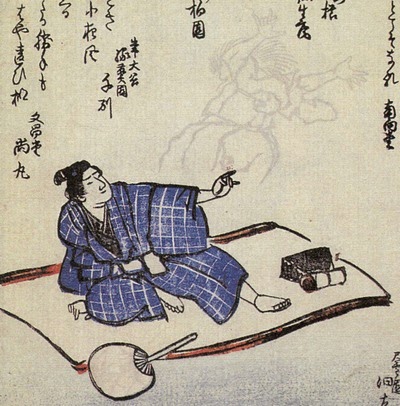
Makuragaeshi - Pull over pillow

The Pull over pillow is a yokai with a specialized function: reposition the pillow at night and strip the bed. It has no known manner. Today, if we find the bed unmade in the morning or just on the floor, do not think that could be the work of a spirit. But if they did in the past because the dream had supernatural properties. Pillows were treated with care as they were vehicles through which our spirits objects traveling to another world. It was a bad omen to change the pillow during sleep, is to separate the soul from the body. In fact makuragaeshi is also used when someone dies and his head pointing north, which is the direction in which Buddha died standing. That's not bode wake up with your head in that direction.

There is a story that explains how the spirit becomes pull over pillow. A blind traveler stayed in an inn. When he believed to be alone in his room, he began to count the coins I had. However, the landlord was spying on him and saw that he had a large sum of money. Driven by greed , the next morning I accompany pretending making guide. He led him to a secluded place, stole and killed him. From that day the spirit is installed at the inn and stir the sleeping pillow in your room. His appearances announce misfortunes.

Mehitotsuboo - Monk Cyclops

It is one of the most famous Japanese yokai. Although usually refers to a one-eyed monk, there are regions where it has one leg (with one or two eyes) while others not even a monk. Sometimes the size of a child and other is giant.

Regarding why one eye, there are legends of all kinds. It is common that the absence of a crop or plant in an area with mehitotsuboo explaining. In Nagano is that a branch of sesame left eyed a god, then identified with this monk, so do not plant the crop there.

Another theory about the origin is similar to the Greek Cyclops. Reacted with blacksmiths wear a patch over one eye to, in case of accident, not becoming blind. It is common to appear with "welded" legs, finished in a single large foot.

A third possible origin is related Gongoro Kagemasa, a samurai that after receiving a crush on one eye kept attacking and killing enemies. He was deified and worshiped. But God , became carrier spirit of misfortunes and later a yokai. This decline could be due to "Gongoro" closely resembles goryoo, which refers to the souls of the dead with the living resentment toward which we must worship to appease.

The monk often visit villages at year end. Prevent their effects have been devised various methods. Hanging at the entrance of a house whose plot twisted baskets recalls thousands of eyes. Another is to hang dried sardines eye pierced by a skewer. Also repel red beans. The next day the children are forced to eat beans because the monk says the name of those who eat them to bring a disease such as smallpox.


That's all for today with regard to Yokais, Enjoy it!


___________________________________________________________________________

Dibujo de: Aloe
Aquí os traigo otros tres Yokai a cambio de que dos de ellos no son ni muy conocidos, ni muy agraciados, en este pack viene el Kitsune, uno al que prácticamente conocemos todos y es de los mas apreciados.
Dibujo de: Segdavinci (Sara)

Kitsune - Zorro

El zorro es uno de los animales mas populares en la mitología japonesa, es un guardián de los dioses o un yokai que engaña y porta enfermedades. El culto a Inari, está muy extendido, este dios o Kami adopta la apariencia de un zorro y sus santuarios están siempre custodiados por un par de estatuas de este animal. Uno de ellos favorece los campos y caza los roedores.

En contraste esta la versión yokai. Este kitsune se diferencia del kami en que no pertenece a ningún santuario, así que no es venerado. El yokai es llamado nogitsune, y puede transmitir enfermedades mortales y poseer a las personas, en Japón existe por esto la expresión "ser pellizcado por un kitsune" usada para cuando una persona "esta en Babia".

También podemos añadir a estos dos los espíritus ninko, que esconden su verdadera forma de zorro en un cuerpo humano, normalmente de una bella joven, para seducir y engañar a los hombres. Según la mitología China el zorro representa lo femenino o yin y por eso tratan de arrebatar el yang a los hombres. También de la mitología China proviene el kitsune de nueve colas, un animal legendario que trae paz y prosperidad. Se dice que quien lo coma será protegido del mal.

Los kitsune tienen varios puntos débiles mientras adoptan la forma de una persona. No aguantan a los perros y al reflejarse en el agua descubren su verdadera figura. Si son atacados, se vengarán en grupo. El mejor antídoto para neutralizar su ataque es comer su carne.

Una famosa historia cuenta que un kitsune disfrazado de mujer llego a casarse y tener hijos. Pero años mas tarde fue descubierta por su marido cuando le "salió" cola por culpa de un perro. En Japón se sigue usando la expresión "enseñar la cola" cuando a uno se le ven las verdaderas intenciones. Otros se transforman en personas y realizan pequeñas travesuras. Una muy comentada es la de ofrecer orina por té a los viajeros fatigados.

El kitsune no ha pasado a la historia. De las personas que se comportan de forma extraña se sigue diciendo que son un kitsune.

Makuragaeshi - Vuelcalmohadas

El vuelcaalmohadas es un yokai con una función especializada: cambiar la posición de la almohada por las noches y deshacer la cama. No tiene forma conocida. Hoy en día, si encontramos la cama deshecha por las mañanas o acabamos en el suelo, no pensamos que ha podido ser obra de un espíritu. Pero si lo hacían en el pasado ya que el sueño tenía propiedades sobrenaturales. Las almohadas eran objetos tratados con cuidado pues eran vehículos a través de los cuales nuestros espíritus viajaban hacia otro mundo. Era un mal augurio cambiar la almohada durante el sueño, equivale a separar el alma del cuerpo. De echo makuragaeshi, se utiliza también cuando alguien muere y se coloca su cabeza señalando al norte, que es la dirección en la que murió Buda. Por eso no es buen presagio despertar con la cabeza en esa dirección.

Hay una historia que explica como un espíritu se convierte en vuelcalmohadas. Un viajero ciego se alojó en una posada. Cuando creyó estar solo en su cuarto, se puso a contar las monedas que tenía. Sin embargo, el posadero lo estaba espiando y vio que tenia una gran suma de dinero. Movido por avaricia, a la mañana siguiente lo acompaño fingiendo hacer de guía. Lo condujo a un lugar apartado, le robo y le mato. Desde aquel día el espíritu esta instalado en la posada y revuelve la almohada a los que duermen en su habitación. Sus apariciones anuncian desgracias.

Mehitotsuboo - Monje Ciclope

Es uno de los yokai mas famosos de Japón. Aunque normalmente se refiere a un monje de un solo ojo, hay regiones en las que tiene una sola pierna (con uno o dos ojos) mientras que en otras ni siquiera es un monje. A veces tiene el tamaño de un niño y otras es gigante.

Respecto al porqué de un solo ojo, hay leyendas de todo tipo. Es común que la ausencia de un cultivo o una planta en una zona se explique con el mehitotsuboo. En Nagano se cuenta que una rama de sésamo dejó tuerto a un dios, identificado después con este monje, por lo que allí no plantan ese cultivo.

Otra teoría sobre su origen es parecida a la de los cíclopes griegos. Reaccionada con los herreros de llevar un parche en un ojo para, en caso de accidente, no quedarse ciegos. Es común que aparezca con las piernas "soldadas", terminadas en un único gran pie.

Un tercer posible origen tiene que ver con Gongoro Kagemasa, un samurai que tras recibir un flechazo en un ojo siguió atacando y matando enemigos. Esté fue divinizado y venerados. Sin embargo, de dios, pasó a ser espíritu portador de desgracias y a yokai posteriormente. Esta caída pudo ser debida a que "Gongoro" se parece mucho a goryoo, que se refiere a las almas de los muertos con resentimiento hacia los vivos a las que hay que adorar para apaciguarlas.

El monje suele visitar las aldeas a final de año. Para prevenir sus efectos se han ideado diversos métodos. Colgar en la entrada de casa unos canastos trenzados cuya trama recuerda a miles de ojos. Otro consiste en colgar sardinas secas con los ojos atravesados por un pincho. También le repelen las habas rojas. El día en el que viene se obliga a los niños a comer habas ya que el monje apunta el nombre de aquellos que no las coman para traerles alguna enfermedad como la viruela.


Eso es todo por hoy en lo referido a Yokais, Disfrutadlo!!

domingo, 2 de marzo de 2014

Yokai 4


Art by: Niuner 


As I promised today I bring you two updates in one day, in compensation for the absence. And as one of the themes that I like are the Yokai because here you have, more mythological beings.

All three of which I will talk today I think are well known and all you sounded.


Kappa - River street arab 

It is one of the most famous and certainly Japan which has had a real existence, until the early XX century as there is news of witnesses who claimed to have found one. In fact, many people consider it an elusive animal that has not yet been discovered more than a Yokai.

They are found in rivers, ponds, where freshwater accumulates. Its appearance resembles that of a turtle or amphibian with humanoid features. Depending on location, is represented by shell and webbed hands and feet. In matching the descriptions is to give a viscous appearance, set its size as a small child, and display it on the neck cavity as a dish full of water always carries. This dish is the trait that defines it and gives you energy. If the plate is empty, dizzy and loses strength. Therefore, one of the tricks to get rid of one, is to pretend kindness and make a bow to the back and spilling water.

Are said to be ancient gods of rivers and lakes, to which the people worshiped. But as man learned to master the water whit construction, unless they came and were forgotten turned kappa.

Weakness for horses, kids and balls of uncertain origin that humans have on our buttocks, the kappa aims to start after leading river bottom prey. Despite its violence, is goofy and has many weaknesses. Do not hold metal objects or food offered to Buddha. Also escapes peas, hemp, sesame seeds and deer antler.


Katawaguruma - One wheel carriage

More than its name (truck wheel), this yokai is identified with a woman climb into a car wrapped in flames that runs at night causing a loud bang. One who looks or laughs she gets a curse, which is multiplied if you talk to someone about what he has seen. It is said that steals the souls of those who dare to look, making it a much feared yokai. Sometimes they do not attack those who see them, but who kidnap their children.

The reason that they appear associated with a wheel is far from clear, although we know that the wheel represents the teachings of dharma and the rapid rotation of a metaphorically explains the infinite concatenation of causes and effects that govern the fate. We may think that women are paying ablaze results wrongdoing.

Legend has it that in Shiga, was a village they passed katawaguruma every night. It was said that whoever saw him lose consciousness, so at dusk all were locked in their homes to avoid meet you. But there was a curious woman one night, hearing the carriage creaked, cracked the door a crack and peered out to see happen to the woman riding on it surrounded by fire. When he was returned to the room and discovered that her baby was gone. She felt guilty and recover the baby nailed to the front door a note saying: "Katawaguruma, shame on me Give me the boy, not yet known as a wheel moves". The next night when the yokai step ahead of the house, saw the note and thought that women should have a good heart so returned the baby, also telling him that now that he had been discovered would no longer haunt the village.


Art by: Jamew85


Keukegen - Furry

The Furry is difficult to see yokai. In fact, it can also mean "exceptional and rarely seen" His body lies under a blanket of long hair that only reveals a nose and two big round eyes. Its appearance resembles that of a spaniel. Lives in areas adjacent to the houses where moisture, such as gardens and baths, or in gloomy interiors of homes whose living conditions are very poor. Its low activity is reduced at night to drink. It is said that finding a furry ad is death or disease to the inhabitants of the house, although it is unclear if it will work as the cause of the misfortunes or simply approaching unhealthy places where death is lurking. It attracts dirt to prevent that strain at home must be kept aerated, let in the sun and avoid dampness.

According to Toriyama Seiken, a minor goddess in China much like furry called "Shaggy woman" exists.

The furry has inspired authors to modern manga and anime. Shigeru Mizuki included it in cartoons and Hayao Miyazaki took it as a base for one of its most distinctive creations, the Susuwatari or "elves dust" My Neighbor Totoro and Spirited Away.


For today 's it, here's your three new Yokai, you 'll upload more soon.
Since that day not able to upgrade and which, as will having no free time I will publish things, I apologize in advance if time does not appear.

_____________________________________________________________________________

Dibujo por: Spacecoyote

Tal como he prometido hoy os traigo dos actualizaciones en un día, en compensación por la ausencia. Y como una de los temas que mas me gustan son los Yokai pues aquí tenéis, mas seres mitológicos.

Los tres de los que voy a hablar hoy creo que son bastante conocidos y a todos os sonaran.

Dibujo por: Casener


Kappa - Golfillo de río

Es uno de los mas famosos de Japón y sin duda el que ha tenido una existencia más real, ya que hasta principios del siglo XX hay noticias de testigos que afirmaban haberse encontrado con uno. De hecho, mucha gente lo considera un animal esquivo que aun no ha sido descubierto mas que un Yokai.

Se encuentran en los ríos, estanques o charcas, donde se acumule agua dulce. Su aspecto recuerda al de una tortuga o anfibio con rasgos humanoides. Dependiendo del lugar, se representa con caparazón y membrana interdigital en manos y pies. En lo que coinciden todas las descripciones es en darle un aspecto viscoso; fijar su tamaño como el de un niño pequeño: y en mostrarlo con una cavidad sobre el cogote a modo de plato que siempre lleva lleno de agua. Este plato es el rasgo que lo define y le da energía. Si el plato se vacía, se marea y pierde la fuerza. Por ello, uno de los trucos para deshacerse de uno, es fingir amabilidad y realizar le una reverencia hasta que la devuelva, derramando así el agua.

Se dice que son antiguos dioses de los ríos y lagos, a los que la gente adoraba. Pero a medida que el hombre aprendió a dominar el agua con la construcción, se vinieron a menos y cayeron en el olvido volviéndose kappa.

Siente debilidad por los caballos, los niños y unas bolas de origen incierto que los humanos tenemos en nuestras nalgas, que el kappa aspira a arrancar tras llevar al fondo del río a su presa. A pesar de su violencia, es tontorrón y tiene muchos puntos débiles. No aguanta los objetos metálicos ni la comida ofrecida a Buda. También escapa de los guisantes, el cáñamo, las semillas de sésamo y la cornamenta de los ciervos.

Dibujo por: Ehime


Katawaguruma - Carro monotrochón

Mas de lo que indica su nombre (Carro de una rueda), este yokai se identifica con una mujer subida en un carro envuelto en llamas que por las noches corre provocando un gran estruendo. Aquel que la ve o se ríe de ella recibe una maldición, que se multiplica si uno habla con otra persona sobre lo que ha visto. Se dice que roba el alma de aquellos que se atreven a mirarlo, siendo así un yokai muy temido. Otras veces no atacan a quienes les ven, si no que secuestran a sus hijos.

La razón de que estos aparezcan asociados a una rueda no está nada clara, aun que sabemos que la rueda representa las enseñanzas del dharma y que el giro rápido de una explica metafóricamente la concatenación infinita de causas y efectos que rigen el destino. Podemos pensar que la mujer envuelta en llamas esta pagando los resultados de una mala acción.

La leyenda cuenta que en Shiga, había una aldea por la que cada noche pasaba el katawaguruma. Se decía que quien lo veía perdía la conciencia, por lo que al oscurecer todos se encerraban en sus casas para evitar encontrárselo. Sin embargo había una joven curiosa que una noche, al escuchar el chirrío del carro, abrió un poco la puerta y por una rendija escudriñó hacia fuera para ver pasar a la mujer montada en él rodeada de fuego. Cuando se fue, volvió a la habitación y descubrió que su bebe había desaparecido. La mujer se sintió culpable y para recuperar al bebe clavó en la puerta de casa una nota que decía: "Katawaguruma, la culpa es mía. Devuélveme al pequeño, que todavía no sabe como se mueve una rueda". A la noche siguiente cuando el yokai paso por delante de la casa, vio la nota y pensó que la mujer debía tener un buen corazón por lo que devolvió el bebé, diciéndole además que ahora que había sido descubierto ya no volvería a rondar la aldea.

Dibujo por: ZombiDJ


Keukegen - Peluso

El peluso es un yokai difícil de ver. De hecho, también puede significar "excepcional y rara vez visto". Su cuerpo se esconde bajo un manto de pelo largo que solo deja ver una nariz y dos grandes ojos redondos. Su aspecto recuerda al de un perro de aguas. Vive en zonas adyacentes a las casas donde hay humedad, como jardines y baños, o en lóbregos interiores de viviendas cuyas condiciones de habitabilidad son muy pobres. Su escasa actividad se reduce a la noche para beber. Se dice que encontrar un peluso es anuncio de muerte o enfermedad para los moradores de esa vivienda, aunque no esta claro si funciona como el causante de las desgracias o simplemente se acerca a lugares insalubres donde la muerte está rondando. Le atrae la suciedad, para prevenir que se cuele en casa hay que mantenerla aireada, dejar que entre el sol y evitar humedades.

Según Toriyama Seiken, en China existe una diosa menor muy parecida al peluso llamada "mujer lanuda".

El peluso ha servido de inspiración a autores modernos de manga y anime. Mizuki Shigueru lo incluyó en sus viñetas y Hayao Miyazaki lo tomo como base para una de sus mas peculiares creaciones, los susuwatari o "duendes del polvo" de Mi vecino Totoro y El viaje de Chihiro.


Por hoy es todo,  aquí tenéis vuestros tres nuevos Yokai, pronto subiré mas.
Puesto que no se que días podre actualizar y cuales no, según vaya teniendo tiempo libre iré publicando las cosas, perdón por adelantado si estoy un tiempo sin aparecer.


Lesson 4

Here I bring you the 4th Japanese lesson, forgive the delay, but I started working on a new site and had nothing of time, I don`t know how often I will be able to upgrade, hopefully often.

In return I'll upload several updates today or at least I 'll leave it prepared.

Vocabulary

おきます                  Rise.
ねます                  Go to bed.
はたらきます                Work.
やすみます                 Resting.
べんきょうします               Study.
おわります                 Finish.

デパート                Department stores.
ぎんこう                  Bank.
ゆうびんきょく               Post Office.
よじゅつかん                Library.
びじゅつかん              Museum of Art.

いま           今       Now.
じ            時       The ~ hours.
ふん (ぷん)      分       ~ Minutes.
はん           半       ~ thirty.
なんじ          何時      What time?
なんぷん         何分      What minute?

ごぜん         午前      From morning.
ごご          午後       Afternoon.

あさ           朝       Morning.
ひる           昼      Day, noon.
ばん(よる)       晩(夜)    Night.

おととい              The day before yesterday.
きのう                 Yesterday.
きょう                  Today.
あした                 Tomorrow.
あさって                After tomorrow.

けさ                  This morning.
ごんばん                 Tonight.

やすみ         休み      Rest, free day.
ひるやすみ       昼休み     Noon break.

まいあさ        毎朝        Daily.
まいばん        毎晩       Every night.
まいにち        毎日       Each day.

げつようび       月曜日       Monday
かようび        火曜日       Tuesday
すいようび       水曜日       Wednesday
もくようび       木曜日        Thursday
きにょうび       金曜日        Friday
どようび        土曜日       Saturday
にちようび       日曜日        Sunday
なにょうび       何曜日     What day of the week?

ばんごう                  Number.
なんばん                 What number?

から                    Since ~.
まで                    Up to ~.

と                  And (to connect nouns)

たいへんですね       It's hard !(to express sympathy for the troubles of others)

えーと                  This. . . Good.

おねがいします              Please (to pray)
かしこまりました         Very Good (To meet clients or guests)
おといおわせのばんごう        The number you are looking for.
どうもありがとうございました       Thank you very much.

ニェーヲーク                New York.
ベキン                   Beijing.
ロンドン                  London.
バンコク                  Bangkok.
ロサンゼルス               Los Angeles.


Explanation of hours and vocabulary of time:

じ - Horas

1   2  3   4  5  6  7  8   9  10
いち  に  さん  よ  ご  ろく  しち  はち  く  じゅう 
11       12
じゅういち    じゅうに


ふん - Minutos 

2    5    7     9
に    ご    なな    きゅう

ぷん - Minutos

1   3    4    6   8   10    20
いっ  さん   よん   ろっ   は   じゅう   にじゅうっ

30       40      50      60
さんじゅうっ   よんじゅうっ   ごじゅうっ    ろくじゅうっ 


しゅう                  Week.
せんしゅう               Last week.
こんしゅう               This week.
らいしゅう               Next week.
しゅうまつ               Weekend.

がつ|げつ               Month.
せんげつ               Last month.
こんげつ               This month.
らいげつ               Next month.
げつまつ               End of month.

ねん|とし                Year.
きょねん                Last year.
ことし                 This year.
らいねん                Next year.

まつ                  Final.
まい                  Each.
まいとし                Each year.
まいつき                Each month.
まいしゅう               Every week.

Grammatical explanation :

1.- いまーじー ふん です
ふんじ  added to numbers suffixes express the hour. To ask about the hours addedなん.
        いま なんじ ですか                                           What time is it?
        しちじ じゅ うぷ ん です                                        There 7 and 10.

2.-  Vます
Vますworks as predicate of a sentence .
       わたし は まいにち べんきょう し ます.            I study every day.

3.- ますV / Vませ ん/ Vました/ Vませ ん でし た
        1)ますis the way of the present and positive futureませ んis the way of the present and future negative .ましたpositive past andませ ん でし た negative past.
        まいあさろくじ に おき ます                             I get up at 6 every morning.
        けさろくじ に おき まし た                                I got up at 6 this morning.
        2) To ask a question only addedか to the end of the sentence. The interrogative is placed where corresponds to the content you want to ask. To answer the verb is repeated.
       きのう べんきょう し まし た か?                      Did you study yesterday?
             はい,べんきょう し まし た                               Yes, I studied .
       まいあさ なん じゅ に おき ます か?              What time is up every morning ?
             ろくじ に おき ます                                            I get up at six.

4.- His (time)にV
にstands behind a noun that represents time indicates the time when the action is performed. It is used with verbs of motion that takes place in an instant, only nouns that are numbers. With the days of the week is not indispensable.
       ろく じはんい おき ます                                  I get up at six thirty.
      7がつ2つか に 日本 へ いく ます                   I came to Japan on July 2 .
       にちようび なら へ いき ます                          I'll go Nara on Sunday.
       きのう べんきょう し まし た                           I studied yesterday.

5.- Sus1 SUS2までから
         1) Equalsから"from", indicates a time or place in which an action is initiated, andまで, equivalent to " up " indicates the end .
        9じ から5じ まで はたらき ます                     I work from 9 to 5.
        大阪 から 東京 まで3じかん かかり ます     It take 3 hours from Osaka to Tokyo.
         2) And They aren't used allways as combination.
        9じ から はたらき ます                                 I work from 9.
         3) Can be used withですから, orから までまで.

6.- Sus1とSUS2
The particleとconnects two nouns.
    ぎんこう の やすみ は 土曜日 と 日曜日 です     Banks are closed on Saturdays and Sundays.

7.- Prayerね
ねat the end of a sentence works to express the feeling of the speaker.ねreflects sympathy for the listener , or the expectation that this match .
       毎 日10時 ごろ まで べんきょう し ます             I study to about 10 every day.
             たいへん です ね                                                It must be very hard .


This is lesson 4, I hope you enjoy it, and again, sorry for the delays!
_______________________________________________________________________________


Aquí os traigo la 4º lección de japones, perdonar el retraso, pero empece a trabajar en un sitio nuevo y no tenia nada de tiempo, ahora no se cada cuanto podre actualizar, espero que a menudo.

En compensación hoy subiré varias actualizaciones o al menos las dejare preparadas.

Vocabulario

おきます                Levantarse.
ねます                 Ir a la cama.
はたらきます               Trabajar. 
やすみます               Descansar. 
べんきょうします             Estudiar
おわります               Terminar.

デパート                Grandes almacenes.
ぎんこう                Banco.
ゆうびんきょく             Oficina de correos.
よじゅつかん              Biblioteca.
びじゅつかん              Museo de arte.

いま           今      Ahora.
じ            時      Las~horas.
ふん (ぷん)      分      ~Minutos.
はん           半     ~y media.
なんじ          何時     ¿Que hora?
なんぷん         何分     ¿Que minuto?

ごぜん         午前     De la mañana.
ごご          午後     De la tarde.

あさ           朝      La mañana.
ひる           昼      Día, mediodía.
ばん(よる)       晩(夜)   Noche.

おととい               Anteayer.
きのう                 Ayer. 
きょう                 Hoy.
あした                Mañana. 
あさって              Pasado mañana.

けさ                 Esta mañana.
ごんばん               Esta noche.

やすみ         休み     Descanso, día libre.
ひるやすみ       昼休み    Descanso de mediodía.

まいあさ        毎朝      Cada mañana. 
まいばん        毎晩      Cada noche.
まいにち        毎日      Cada día.

げつようび       月曜日      Lunes.
かようび        火曜日      Martes. 
すいようび       水曜日      Miércoles.
もくようび       木曜日       Jueves. 
きにょうび       金曜日      Viernes.
どようび        土曜日      Sábado.
にちようび       日曜日      Domingo.
なにょうび       何曜日    ¿Que día de la semana?

ばんごう                 Número.
なんばん                ¿Qué número?

から                   Desde~.
まで                   Hasta~.

と              Y (para conectar sustantivos) 
 
たいへんですね      Es difícil!. (para manifestar simpatía por la dificultad de otros)

えーと                 Esto. . . Bueno.

おねがいします            Por favor (para rogar)
かしこまりました         Muy bien (Para atender a clientes o huéspedes)
おといおわせのばんごう       El número que usted busca.
どうもありがとうございました      Muchas gracias. 

ニェーヲーク               Nueva York.
ベキン                   Pekín.
ロンドン                  Londres.
バンコク                  Bangkok.
ロサンゼルス               Los Angeles.


Explicación de las horas y vocabulario de tiempo:

じ - Horas

1   2  3   4  5  6  7  8   9  10
いち  に  さん  よ  ご  ろく  しち  はち  く  じゅう 
11       12
じゅういち    じゅうに


ふん - Minutos 

2    5    7     9
に    ご    なな    きゅう

ぷん - Minutos

1   3    4    6   8   10    20
いっ  さん   よん   ろっ   は   じゅう   にじゅうっ

30       40      50      60
さんじゅうっ   よんじゅうっ   ごじゅうっ    ろくじゅうっ 


しゅう                  Semana.
せんしゅう               Semana pasada.
こんしゅう                Esta semana.
らいしゅう               Semana que viene.
しゅうまつ                Fin de semana.

がつ|げつ                Mes.
せんげつ                Mes pasado.
こんげつ                 Este mes.
らいげつ                Mes que viene.
げつまつ                Fin de mes.

ねん|とし                 Año.
きょねん                 Año pasado.
ことし                  Este año.
らいねん                Año que viene.

まつ                   Final.
まい                   Cada.
まいとし                 Cada año.
まいつき                 Cada mes.
まいしゅう                Cada semana.


Explicación gramatical:

1.-いまーじーふんです
Se agregan los sufijos じyふん a los números para expresar la hora. Para preguntar por las horas se agregaなん.
  いまなんじですか?         ¿Qué hora es?
   しちじじゅうぷんです         Son las 7 y 10.

2.- Vます
Vます Funciona como predicado de una oración.
  わたしはまいにちべんきょうします。  Estudio todos los días.

3.- Vます/Vません/Vました/Vませんでした
        1) ますes la forma del presente y el futuro positiva, ませんes la forma del presente y el futuro negativa. ました es la forma del pasado positiva y ませんでしたla forma del pasado negativa.
  まいあさろくじにおきます      Me levanto a las 6 todas las mañanas.
  けさろくじにおきました       Me levanté a las 6 esta mañana.
        2)Para hacer una pregunta tan solo se agregaか al final de la oración. Los interrogativos se colocan donde corresponde al contenido que se quiere preguntar. Para contestar se repite el verbo.
  きのうべんきょうしましたか?     ¿Estudió ayer?
    はい、べんきょうしました      Si, estudié.
  まいあさなんじゅにおきますか?   ¿A qué hora se levanta cada mañana?
    ろくじにおきます          Me levanto a las seis.

4.-Sus (tiempo)に V
Colocando に detrás de un sustantivo que represente tiempo indica el momento en que se realiza la acción. Se emplea con verbos de movimiento que se realiza en un instante, solo con sustantivos que sean cifras. Con los días de la semana no es indispensable.
  ろくじはんいおきます        Me levanto a las seis y media.
  7がつ2つかに日本へいくます    Vine a Japón el 2 de julio.
  にちようびならへいきます      Voy a Nara el domingo.
  きのうべんきょうしました       Estudié ayer.

5.- Sus1からSus2まで
         1)からEquivale a "desde" del español, indica un tiempo o un lugar, en el que se inicia una acción, y まで , equivale a "hasta" del español e indica el final.
  9じから5じまではたらきます     Trabajo de 9 a 5.
  大阪から東京まで3じかんかかります Se tardan 3 horas desde Osaka hasta Tokio.
         2) y no siemrpe se usan combinados.
  9じからはたらきます        Trabajo desde las 9.
         3)Se puede usar ですjunto conから,まで oからまで.

6.- Sus1と Sus2
La particulaと conecta dos sustantivos.
  ぎんこうのやすみは土曜日と日曜日です Los bancos están cerrados los sábados y domingos.

7.- Oraciónね
ね al final de una oración funciona para expresar el sentimiento del hablante. ね refleja la simpatía para con el oyente, o la expectativa de que este de acuerdo. 
  毎日10時ごろまでべんきょうします  Estudio hasta alrededor de las 10 cada día.
    たいへんですね          Debe ser muy duro.


Esta es la lección 4, espero que la disfrutéis, y de nuevo, perdón por las tardanzas!

viernes, 21 de febrero de 2014

Lesson 3 part2

Here I bring you the second part of Lesson 3, I forgive the inconvenience.

Reference words:

             デパート                                                  Stores

おくじょう           ゆうえんち                                               Amusement

8かい                 しょく とう,もよお もの か いじょう           Restaurant, lounge events
7かい                と けい,めがね,カメラ                              Watches, sunglasses, cameras
                                                                                                       
6かい                スポーツ ようひん,りょ こよ う ひん         Sporting goods, travel goods

5かい               こども ふく,おもちゃ,ほん,ふん ぼうぐ     Child cothes , toys, books, stationery

4かい              かぐ,しょっき,でんき せい ひん                 Furniture, porcelain, appliances

3階                  しんし ふく                                                 Men Articles

2階                 ふじんふく                                                  Ladies Articles

1階                くつ,かぱん,アクセサリ-け しょうひん       Shoes, handbags, jewelry, cosmetics

B1階              しょく ようひん                                            Food

B2階             ちゅうしゃ じょう                                          Parking

Grammatical explanation :

1 - .ここ/そこ/あそこ/こちら/そちら/あちら
    We saw that これ,それ, あれindicate objectsここ,そこ,あそこare relative to the location and amount to here, there and there.
     こちら,あちら,そちら indicate the orientation, but also used as a polite way ofここ,そこorあそこ.

2.- Noun1はNoun2 (place)です
     This pattern of phrase is used to indicate the place where there are objects, places, people, etc.
            お で あらい は あそこ です.                                Grooming is there.
           でんわ は2かい です.                                            Phone is on the 2nd floor.
            やまだ さん は じむしょ です.                               Sr.Yamada is in the office.

3 - .どこ/どちら
    どこused to inquire about the place andどちらfor guidance. どちらalso used as polite form ofどこ.
            お てあらい は どこ ですか.                                 Where is the toilet?
                 あそこ です.                                                           There.
           イレ べ ーター は どちら ですか.                          Where is the elevator?
                 あちら です.                                                           Over there.

   When we asked for the name of the companies belonging toどこor something interrogativeどちらused instead ofなん, どちらalways be more polite thanどこ.
            かつ こう は どこ ですか.                                    What is the name of your school?
           かいしゃ は どち た ですか.                                What company do you work?

4 - . Noun1のNoun2 .
     When Noun1 is the name of a country and a product is Noun2, Noun1のindicates the place or country where Noun2 was manufactured. Sis Noun1 is a company, means Noun1の Noun2 this fact in that company. In both the interrogative isどこ.
           これ は どこ の コンピューター ですか.             Whence is this computer ?
                   にほん お コンピューター です.                            At Japan.
                   IMCの コンピュ ー た ー です.                             From IMC.

5 - The systemこ/そ/あ/ど. :
                                  こcategory      そCategory          あCategory            どCategory
             Objects         これ               それ                    あれ                      どれ( Lec.8 )
             People           このNoun      そのNoun            あのNoun             どの( Lec.16 )
             Location        ここ                そこ                    あそこ                   どこ
             Orientation     こちら            そちら                 あちら                  どちら

6 - .おくに
     The prefix お standing refer to the third person to show respect.
             おき に は どちら ですか                                  What country are you?


Well, finally finished this lesson 3, I hope this will be useful, Enjoy it!


___________________________________________________________________________

Aquí os traigo la segunda parte de la lección 3, perdonar las molestias.

Palabras de referencia:

      デパート                                           Grandes Almacenes

おくじょう             ゆうえんち                                                           Parque de diversiones

8かい             しょくとう、もよおものかいじょう                        Restaurante, salón de
                                                                                                             eventos  
7かい            とけい、めがね、カメラ                                     Relojes, gafas, cámaras
                                                                                                             fotográficas
6かい            スポーツようひん、りょこようひん                     Artículos de deporte,
                                                                                                            artículos de viaje
5かい            こどもふく、おもちゃ、ほん、ふんぼうぐ         Ropa de niños, juguetes,                                                                                                                               libros, papelería
4かい            かぐ、しょっき、でんきせいひん                      Muebles, porcelana,                                                                                                                                       electrodomésticos
3階             しんしふく                                                            Artículos para caballeros                                                                                                  
2階            ふじんふく                                                            Artículos para damas

1階              くつ、かぱん、アクセサリ-、けしょうひん      Calzado, bolsos, bisutería,
                                                                                                          cosméticos.
B1階            しょくようひん                                                       Alimentos

B2階     ちゅうしゃじょう                                                            Estacionamiento

Explicación gramatical:

1.- ここ/そこ/あそこ/こちら/そちら/あちら
      これ、それ、あれ que ya vimos, indican objetos, ここ、そこ、あそこ son relativos al lugar y equivalen a aquí, ahí y allí.
     こちら、そちら y あちら indican la orientación, pero también se usan como la forma cortés de ここ,そこ o あそこ.

2.-Sus1はSus2(lugar)です
 Este patrón de frase sirve para indicar el lugar donde se encuentran objetos, lugares, personas, etc. 
        おであらいはあそこです。                                        El aseo está allí.
  でんわは2かいです。                                             El teléfono esta en el piso 2.
  やまださんはじむしょです。                                     El Sr.Yamada está en el despacho.

3.-どこ/どちら
    どこsirve para preguntar por el lugar y どちら, por la orientación. También どちら se usa como forma cortés de どこ.
  おてあらいはどこですか。                                      ¿Dónde está el aseo?          
    あそこです。                                                             Está allí.
  イレべーターはどちらですか。                               ¿Dónde está el ascensor?
    あちらです。                                                             Está por allí.

   Al preguntar por el nombre de las empresas a las que pertenece algo se emplean interrogativos de どこ o どちら en vez de なん, どちら siempre será mas cortés que どこ.
        かつこうはどこですか。                                          ¿Cuál es el nombre de su escuela?
       かいしゃはどちたですか。                                       ¿Para qué empresa trabaja usted?

4.- Sus1のSus2.
     Cuando Sus1 es el nombre de un país y Sus2 un producto, Sus1の indica el lugar o país donde se fabricó Sus2. Sis Sus1 es una empresa, Sus1の significa que Sus2 esta hecho en esa empresa. En ambos casis el interrogativo es どこ.
       これはどこのコンピューターですか。                     ¿De dónde es este ordenador?
              にほんおコンピューターです。                                    Es de Japón.                              
             IMCのコンピューたーです。                                    Es IMC.

5.- El sistema こ/そ/あ/ど:
         こcategoría   そCategoría   あCategoría  どCategoría
   Objetos   これ    それ     あれ      どれ(Lec.8)
   Persona   このSus    そのSus     あのSus    どの(Lec.16)
   Lugar    ここ    そこ     あそこ    どこ
   Orientación    こちら   そちら    あちら    どちら

6.-おくに
     El prefijo お se coloca al referirse a la tercera persona para mostrar respeto.
             おきにはどちらですか                                  ¿De qué país es usted?


Bueno, al fin esta acabada la lección 3, espero os este siendo útil, Disfrutadlo!

jueves, 20 de febrero de 2014

Lession 3 part 1


How I promised here is the lesson of japanese:

Vocabulary:

ここ                                                                                           Here
そこ                                                                                           There
あそこ                                                                                       That place
どこ                                                                                           Where

こちら                                                                                        This way
そちら                                                                                        Over there
あちら                                                                                        That way
どちら                                                                                         Whereby

きょうしつ                                                                                  Classroom
しょくどう                                                                                    Dining room
じむしょ                                                                                     Office
かいぎしつ                                                                                Meeting room
うけつけ                                                                                    Reception
ロビー                                                                                        Lobby
へや                                                                                          Room
トイレ(おであらい)                                                               Toilet
かいだん                                                                                   Stairs
エレベーター                                                                             Lift
エスカレーター                                                                          Escalators

(お)くに          国                                    (Your) Country
かいしゃ                                                                                    Company
うち                                                                                            Home

でんわ                                                                                      Telephon
くつ                                                                                           Shoes
ネクタイ                                                                                    Necktie
ワイン                                                                                       Wine
たばこ                                                                                       Tobacco

うりば                                                                                        Section
ちか                                                                                          Basement
ーかい (がい)      階                                    Floor
なンがい          何階                          What floor?

ーえん           ー円                                   ~Yen
いくら                                                                                        How much (only for money)

ひゃく            百                              Hundred
せん            千                                      Thousand
まん            万                                   Ten thousand

すみません                                                                               Excuse me! (to draw the
                                                                                                 attention of a person)
ーでございます                                                                        (Corteously です)
(-を)みせてください                                                          Please show me~
じゃ                                                                                           So, then (to decide buying or
                                                                                                 ask for something)
(-を)ください                                                                     Please, give me ~

イタリア                                                                                    Italy
スイス                                                                                      Switzerland

I'll leave it here for today, tomorrow I'll upload the continuation of this lesson, which is more appropriate vocabulary and grammar explanations.

Enjoy it!
________________________________________________________________________________


Como prometí aquí esta la nueva lección de japones:

Vocabulario:

ここ                     Aquí
そこ                                                                                   Ahí
あそこ                                                                               Aquel lugar
どこ                                                                                   Dónde

こちら                                                                                Por aquí
そちら                                                                               Por ahí
あちら                                                                               Por allí
どちら                                                                               Por dónde

きょうしつ                                                                         Aula
しょくどう                                                                          Comedor
じむしょ                                                                            Oficina
かいぎしつ                                                                       Sala de reuniones
うけつけ                                                                           Recepción
ロビー                                                                              Vestíbulo
へや                                                                                 Habitación
トイレ(おであらい)                                                      Baño
かいだん                                                                          Escaleras
エレベーター                                                                    Ascensor
エスカレーター                                                                 Escalera mecánica

(お)くに          国                           País (su)
かいしゃ                                                                          Empresa, firma
うち                                                                                  Casa

でんわ                                                                             Teléfono
くつ                                                                                   Zapatos
ネクタイ                                                                           Corbata
ワイン                                                                              Vino
たばこ                                                                             Tabaco

うりば                                                                             Sección
ちか                                                                               Sótano
ーかい (がい)      階                       -Piso, planta
なンがい          何階                    Qué piso

ーえん           ー円                       -Yen
いくら                                                                            Cuánto (solo para dinero)

ひゃく            百                  Cien
せん            千                          Mil
まん            万                        Diez mil

すみません                                                                   Disculpe (para llamar la atención de
                                                                                      alguien)
ーでございます                                                            (Forma cortés de です)
(-を)みせてください                                              Por favor muéstreme ~
じゃ                                                                               Bueno, entonces (al decidir comprar o
                                                                                     pedir algo)
(-を)ください                                                         Deme ~ , por favor.

イタリア                                                                        Italia
スイス                                                                          Suiza

Lo voy a dejar aquí por hoy, mañana subiré la continuación de esta lección, que tiene mas vocabulario y las explicaciones gramaticales correspondientes.

Disfrutadlo!